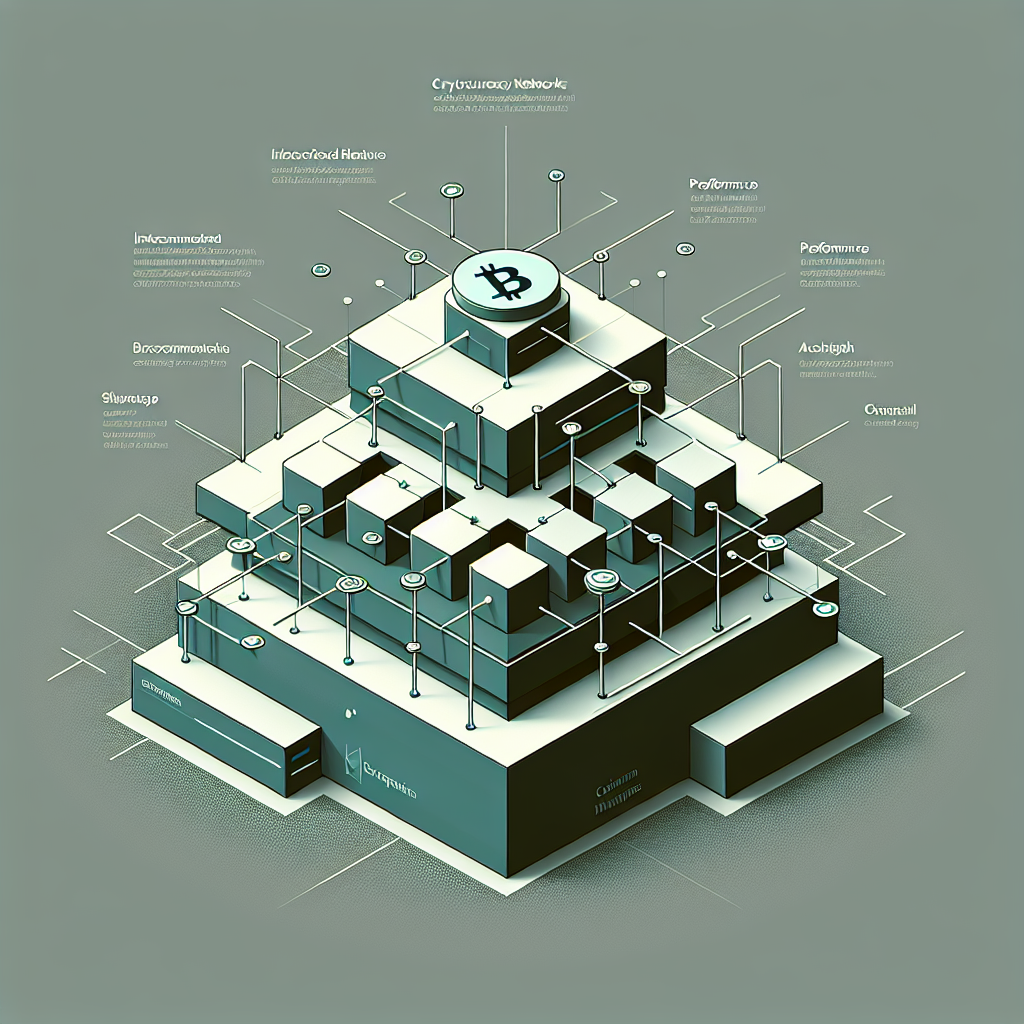
Hyperliquid sits at the center of crypto industry discussions because cost control and access to liquidity increasingly define risk in volatile markets. Capital is rotating between major settlement assets such as XRP and emerging trading venues, while liquidity concentration highlights structural shifts. Traders watching liquidity fragmentation and exchange depth can assess volatility exposure more precisely. Monitoring spot to derivatives balance offers a practical market pulse. Market structure now determines execution quality.
Technical and Industry Structure Analysis
Speed matters when execution cost depends on system throughput and matching stability across venues. Hyperliquid architecture emphasizes performance efficiency through specialized sequencing and validator grouping, where validators coordinate order inclusion with deterministic block timing.
Security remains anchored in layered security controls and modular scalability, while cross-network interoperability via bridges reduces capital isolation risk. A practical metric to review is real-time transaction confirmation latency on the main interface. For investors, evaluate validator dispersion and bridge utilization before sizing exposure.
- Monitor validator concentration trends
- Track bridge utilization flows
- Review confirmation latency daily
- Assess liquidity depth stability

Coin Trends and On-Chain Metrics
Liquidity conditions influence trading cost as transaction volume concentrates on fewer derivatives-centric venues. Hyperliquid shows rising network activity alongside expanding active addresses, indicating trader onboarding rather than passive holding.
Stable gas/fees ratios signal operational balance, and collateral inflows expand effective liquidity buffers within the system. In practical remittance or arbitrage scenarios, lower fees can reduce transfer overhead between exchanges. Active traders may map transaction volume against fee stability for tactical positioning.
Volatility management improves when TVL and staking patterns reveal capital commitment depth. Within Hyperliquid, staking engagement interacts with validator rewards, influencing governance alignment and reserve backing stability.
Observed expansion in bridges usage suggests capital cycling between spot holdings and margin accounts rather than idle storage. In savings or yield rotation strategies, users often track staking ratios to understand risk buffering. Long-term holders can compare TVL stability with staking participation rates.
Access to derivatives impacts cost efficiency as liquidity pools integrate multiple margin assets. XRP has concurrently recorded higher transaction volume across exchanges, while cross-venue network activity indicates renewed transfer cycles.
Shifts in active addresses and stable gas/fees suggest users are repositioning funds for short-term hedging rather than long dormancy. For payment settlement use cases, faster settlement cycles support merchant turnover. For investors, monitor active addresses alongside derivatives liquidity concentration.

Market Technology Trends and Outlook
Risk management increasingly depends on regulatory clarity and adaptive governance frameworks across exchanges and liquidity hubs. Capital movement toward derivatives-native venues reflects evolving institutional flows, while cross-network interoperability reduces settlement fragmentation.
Enhanced security controls and portable collateral models are shaping the next phase of market architecture. Compared to earlier cycles dominated by single-asset narratives, diversified liquidity routing broadens risk distribution, signaling structural maturation. For investors, assess policy developments and interoperability metrics before reallocating exposure.
Leave a Reply