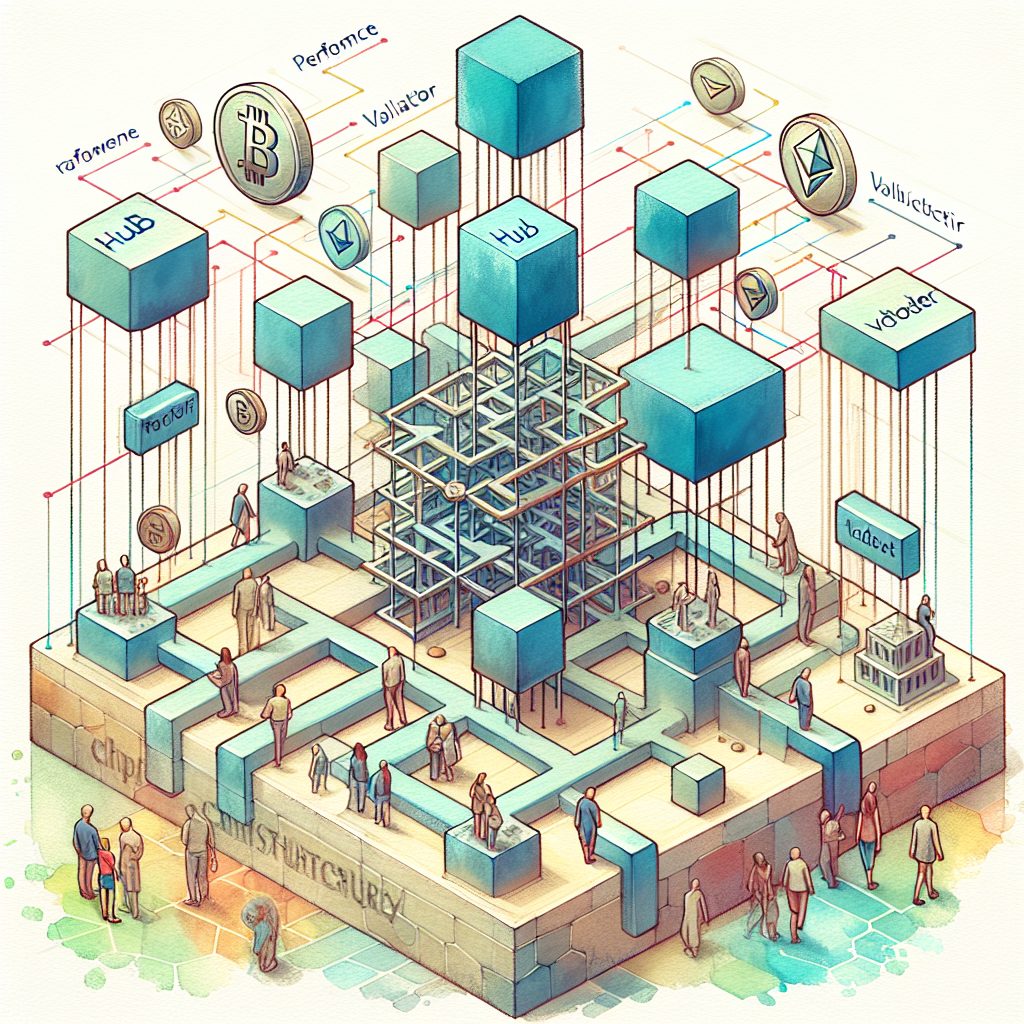
Cost and speed define why Solana matters in volatile conditions, as lower transaction expenses and faster confirmation cycles directly affect user access and portfolio risk management. Solana has returned to the center of active trading discussions as throughput and liquidity conditions shift across major networks. One practical metric to check today is transaction volume, which reflects real demand rather than narrative momentum. Speed and cost efficiency remain decisive evaluation anchors.
Technical and Industry Structure Analysis
Speed improvements hinge on throughput (transaction throughput capacity) and sustained performance efficiency across validator nodes, both central to Solana’s technical identity. The network relies on clustered validators to maintain security while coordinating high block production rates, and this structure influences perceived scalability under peak demand. A simple user check is current gas or fees levels, as fee compression often signals relief in pipeline congestion. Compared to more execution-layer-constrained networks, Solana sustains higher base-layer throughput, implying differentiated traffic absorption capacity.
For investors, tracking interoperability links and validator distribution alongside transaction confirmations helps assess structural resilience; investors should monitor validator concentration and fee stability. Maintain focus on sustained technical coherence.
- Monitor validator uptime consistency across clusters
- Track fee pressure during peak volumes
- Review cross-chain bridge load balancing
- Assess block production stability under stress

Coin Trends and On-Chain Metrics
Liquidity conditions shape slippage costs, and TVL (total value locked) trends indicate capital commitment inside Solana-based protocols. Recently, transaction volume and active addresses have expanded in parallel, suggesting broader participation rather than isolated whale flows. For a payment scenario, users seeking fee reduction can compare current gas or fees against recent averages before transferring funds. An observable metric is DEX volume, which captures retail and professional routing behavior.
Liquidity depth across pools and sustained network activity together define execution confidence; investors should consider TVL stability and DEX turnover when evaluating durability. Capital stickiness often precedes volatility compression.
Speed advantages affect remittance efficiency, and bridges (cross-network transfer routes) influence how assets circulate beyond a single chain. Growth in staking participation supports validator incentives, while consistent validators performance underpins block reliability. For a savings scenario, participants may allocate tokens to staking to offset transaction costs through yield, making staking ratio a practical metric to review. Compared to ecosystems with heavier fee volatility, Solana’s lower base fees can support micro-transfers, which implies broader retail feasibility.
Changes in bridge flows paired with validator counts offer structural clues; investors should monitor staking ratios and cross-chain inflows to evaluate commitment strength. Stable participation signals operational continuity.
Access expansion depends on predictable costs, and gas or fees behavior directly shapes user retention during active trading windows. Sustained throughput under load supports consistent performance efficiency, preventing congestion spikes that disrupt execution timing. In a daily spending context, lower confirmation latency enables smoother settlement for small payments, so confirmation time is a practical figure to track. Relative to periods of elevated volatility, smoother fee curves indicate operational maturity and improved routing stability.
Rising network activity combined with balanced fee dynamics suggests execution readiness; investors should evaluate confirmation speed and fee dispersion before scaling exposure. Execution quality determines realized outcomes.

Market Technology Trends and Outlook
Risk management now intersects with scalability expectations and ongoing debates around governance standards across major networks. Broader discussions around policy shift and compliance architectures influence capital routing patterns, while consistent security assurances remain foundational for sustained liquidity. For investors, assessing market breadth through cross-asset participation and bridge volumes provides context for capital rotation strategies. As ecosystems mature, interoperability design and validator transparency will increasingly determine competitive differentiation; investors should monitor governance participation and structural upgrades to evaluate positioning. Technical durability ultimately shapes long-term capital allocation.
Leave a Reply